

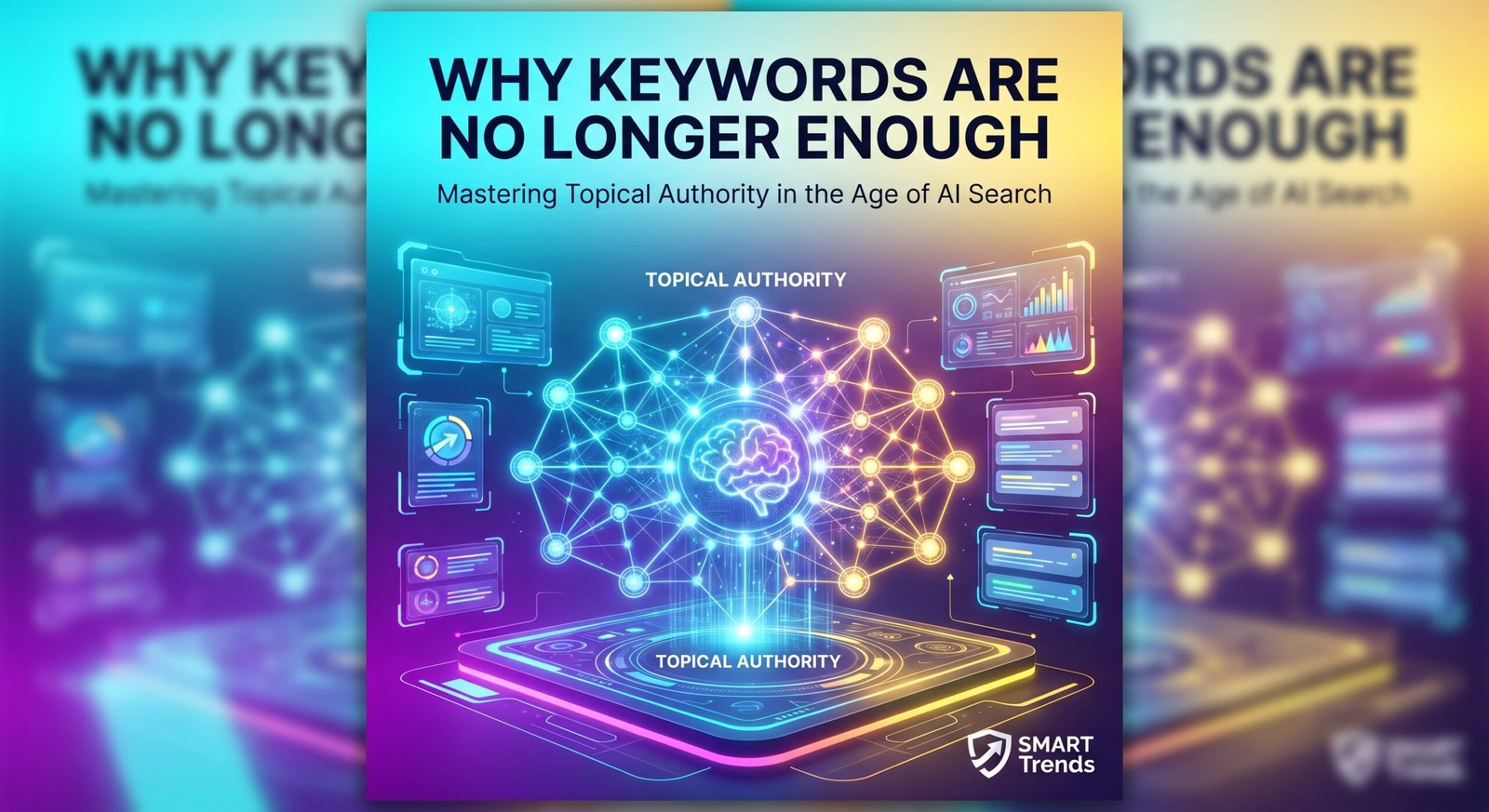

For nearly two decades, the formula for ranking on search engines was simple and mechanical:
Find a high-volume keyword, sprinkle it across your title tags, headings, and body paragraphs a few times, build a handful of backlinks, and watch the traffic roll in.
Today, that playbook is broken.
With the rapid rise of artificial intelligence, generative search experiences, and advanced semantic algorithms, search engines no longer match strings of text; they evaluate concepts, entities, and relationships.
If your content strategy still revolves around isolated keywords rather than comprehensive subject mastery, your organic traffic is standing on shaky ground.
To win organic visibility, modern brands must master Topical Authority.
1. What is Topical Authority (And Why Did Search Change)?
Topical authority is a measure of how deeply and comprehensively a website covers a specific subject area.
Instead of ranking for a single search term, a website with strong topical authority is recognized by search algorithms as a trusted, definitive source across an entire industry sub-niche.
Think of it this way:
- The Old Way (Keyword Focus): You write one isolated article targeting “best link building agency” and hope it ranks based purely on on-page SEO and three guest post links.
- The New Way (Topical Authority): You build an interconnected web of content covering every single sub-topic and technical link building risks, anchor text distribution, digital PR, SaaS organic case studies, and anchor text ratios, proving to the algorithm that your brand understands the entire ecosystem of link acquisition.
Search engines have evolved to prioritize user intent and trustworthiness.
They want to serve users the platform that knows the subject best, not just the page that optimized a keyword the hardest.
2. The Impact of AI Search and SGE on Content Strategy
Generative AI features in search engines summarize information directly on the search results page.
When a user asks a complex question, the AI synthesizes an answer pulled from sources it deems trustworthy.
How does the AI choose which brands to cite?
- Entity Recognition: It checks if your brand is consistently recognized across the web in association with key industry concepts.
- Depth of Coverage: It looks at whether your website provides complete, nuanced answers or superficial surface-level definitions.
- Contextual Endorsements: It evaluates whether authoritative external publications link to your content as a primary reference.
If your website only features thin, keyword-stuffed articles, AI search engines will bypass you entirely because you don’t possess verified topical depth.
3. How to Build a Powerful Topical Map for Your Brand
Transitioning from keyword targeting to topical authority requires a structural shift in how you plan your content calendar.
Here is a practical roadmap:
Step 1: Identify Your Core Pillars
Define 3 to 5 core pillars that represent your ultimate business expertise.
For an organic growth agency, these pillars might include:
- Technical SEO & SGE Adaptation
- Contextual Link Building & Niche Edits
- B2B SaaS Organic Growth Strategies
- Digital PR & Brand Mentions
Step 2: Map Out Cluster Topics
Under each core pillar, brainstorm every single sub-question, sub-topic, and pain point your target audience might search for.
If your pillar is Link Building, your cluster topics should cover anchor text distribution, toxic link audits, guest post vetting, and measuring link ROI.
Step 3: Interlink Relentlessly
Content silos only work if they are connected. Use smart internal linking to pass link equity and contextual relevance between your broad pillar pages and your specific sub-topic articles.
This helps search engine crawlers map out your site structure cleanly.
4. The Synergy Between Topical Content and High-Authority Links
Content alone is not enough to build topical authority in a competitive market.
Even the best-written article on the internet will struggle to rank if it exists in a vacuum.
This is where strategic link building enters the equation:
- Contextual Relevance: Earning niche edits or guest post placements from websites that talk about your exact topic signals to search engines that your authority is validated by peers.
- Anchor Text Diversification: Natural, brand-matched, and topical anchor texts reinforce your entity footprint across the web.
When deep topical content meets high-authority contextual links, you create an unbeatable organic moat.
Conclusion: Stop Chasing Keywords, Start Owning Topics
The evolution of search is moving away from keyword tricks and toward genuine expertise.
Brands that adapt to this shift by building true topical authority will capture the lion’s share of organic traffic, while keyword-stuffing competitors fade away.
At Smart SEO Trends, we help SaaS companies and B2B brands build comprehensive content ecosystems backed by high-authority contextual link building.
Don’t just chase individual search terms; own your entire niche.
Ready to build a resilient, authority-driven organic growth engine? Partner with Smart SEO Trends today.