

DoFollow vs. NoFollow Links: What’s the Difference?
Backlinks play a crucial role in search engine optimization (SEO).
They help search engines understand the credibility, authority, and relevance of your website.
However, not all backlinks work the same way.
Two of the most common types are DoFollow and NoFollow links.
Understanding the difference between these link attributes is essential for building an effective SEO strategy.
While many businesses focus only on DoFollow links, NoFollow links also offer valuable benefits that contribute to a healthy backlink profile.
What Are DoFollow Links?
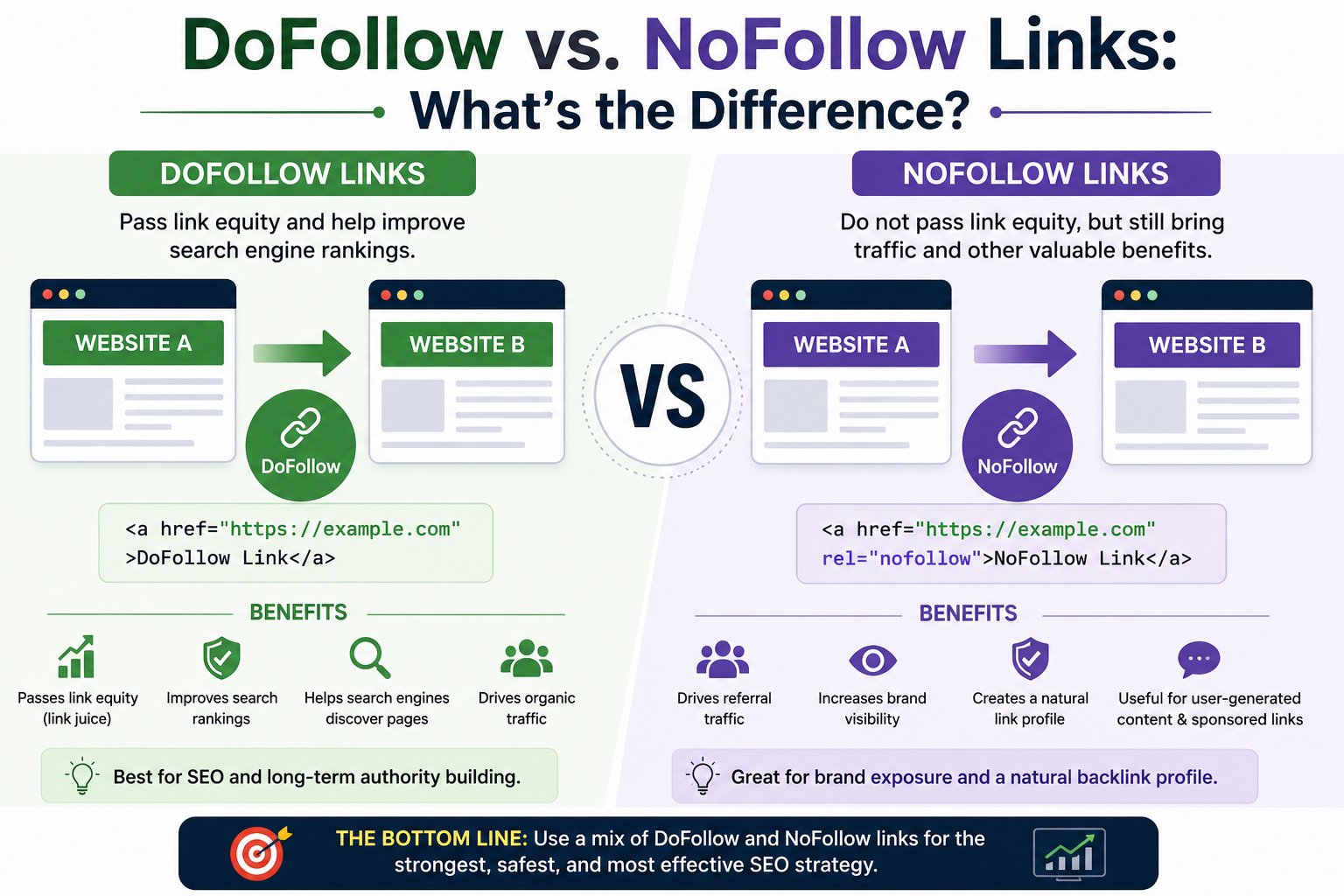
A DoFollow link is a standard hyperlink that allows search engines to crawl the linked page and pass ranking signals, often referred to as “link equity” or “link juice.”
When a reputable website links to your content using a DoFollow link, it signals to search engines that your page is trustworthy and valuable.
These links can help improve keyword ranking, increase domain authority, and drive organic traffic.
Most editorial backlinks, guest posts, and contextual links are DoFollow unless the website owner specifically adds another link attribute.
What Are NoFollow Links?
A NoFollow link contains a special HTML attribute that tells search engines not to pass traditional ranking signals through that particular link.
Originally introduced to reduce spam in blog comments, NoFollow links are now commonly used for sponsored content, advertisements, user-generated
content, and situations where a publisher doesn’t want to endorse another website.
Although NoFollow links generally don’t pass the same SEO value as DoFollow links, they still provide important marketing and branding benefits.
The Main Differences
The biggest difference between DoFollow and NoFollow links is how search engines treat them.
DoFollow links contribute directly to your website’s authority by passing link equity, making them especially valuable for improving search rankings.
NoFollow links, while typically not passing traditional ranking signals, can still generate referral traffic, increase brand visibility, and diversify your backlink profile.
From a user’s perspective, both links function the same. Visitors can click either one and reach the destination page without noticing any difference.
Why DoFollow Links Matter for SEO
DoFollow backlinks remain one of the strongest ranking signals in modern SEO.
High-quality DoFollow links from authoritative, niche-relevant websites can:
- Improve keyword rankings
- Increase domain authority
- Strengthen topical relevance
- Help search engines discover new content
- Drive qualified referral traffic
This is why most professional link building services focus on acquiring editorial DoFollow backlinks from trusted publishers.
However, quality always matters more than quantity.
A few relevant DoFollow links from respected websites are usually far more valuable than hundreds of links from low-quality sources.
Why NoFollow Links Still Have Value
Many website owners mistakenly believe NoFollow links are useless. In reality, they provide several important benefits.
A NoFollow link placed on a popular website can send highly targeted visitors to your site, increasing brand awareness and generating leads or sales.
They also contribute to a natural-looking backlink profile.
If every backlink pointing to your website is DoFollow, your link profile may appear manipulated.
A healthy mix of DoFollow and NoFollow links reflects how websites naturally earn mentions across the web.
Additionally, Google has stated that it may treat NoFollow links as hints in certain situations, meaning they can still play a supporting role in content discovery and indexing.
Building a Natural Link Profile
Successful link-building campaigns don’t focus exclusively on one link type.
Instead, experienced SEO professionals aim for a balanced backlink profile that includes:
- Editorial DoFollow backlinks
- Guest posts
- Contextual link insertions
- Brand mentions
- Digital PR links
- Relevant NoFollow citations
This diversity makes your backlink profile appear more authentic and reduces the risk of over-optimization.
Which Link Type Should You Prioritize?
If your primary goal is improving organic rankings, DoFollow links should receive the greatest attention because they directly contribute to your website’s authority.
However, ignoring NoFollow opportunities would be a mistake.
A mention on a respected news website, industry publication, or social platform may generate valuable referral traffic, increase brand recognition, and
even lead to additional editorial backlinks from other websites.
In many cases, those indirect benefits are just as valuable as the SEO impact itself.
Best Practices for Link Building
Whether you’re building DoFollow or NoFollow links, quality should always come first.
Focus on earning backlinks from relevant, authoritative websites within your niche.
Avoid spammy directories, automated link-building services, and low-quality websites that exist solely to sell backlinks.
Working with providers that offer professional link building services ensures your backlinks come from trusted publishers through ethical outreach and editorial placements.
Long-term SEO success comes from building relationships, publishing valuable content, and earning links naturally rather than chasing shortcuts.
Final Thoughts
DoFollow and NoFollow links both play important roles in a successful SEO strategy.
DoFollow links remain the primary driver of search rankings because they pass authority between websites,
While NoFollow links contribute through referral traffic, brand exposure, and backlink diversity.
Rather than treating one as good and the other as useless, businesses should understand how each fits into a balanced SEO strategy.
The strongest link-building campaigns combine high-quality DoFollow backlinks with natural
NoFollow mentions to create a healthy backlink profile that supports sustainable, long-term growth.
By focusing on relevance, quality, and ethical outreach, your website can earn the trust of both search engines and users, resulting in stronger rankings and lasting online authority.