

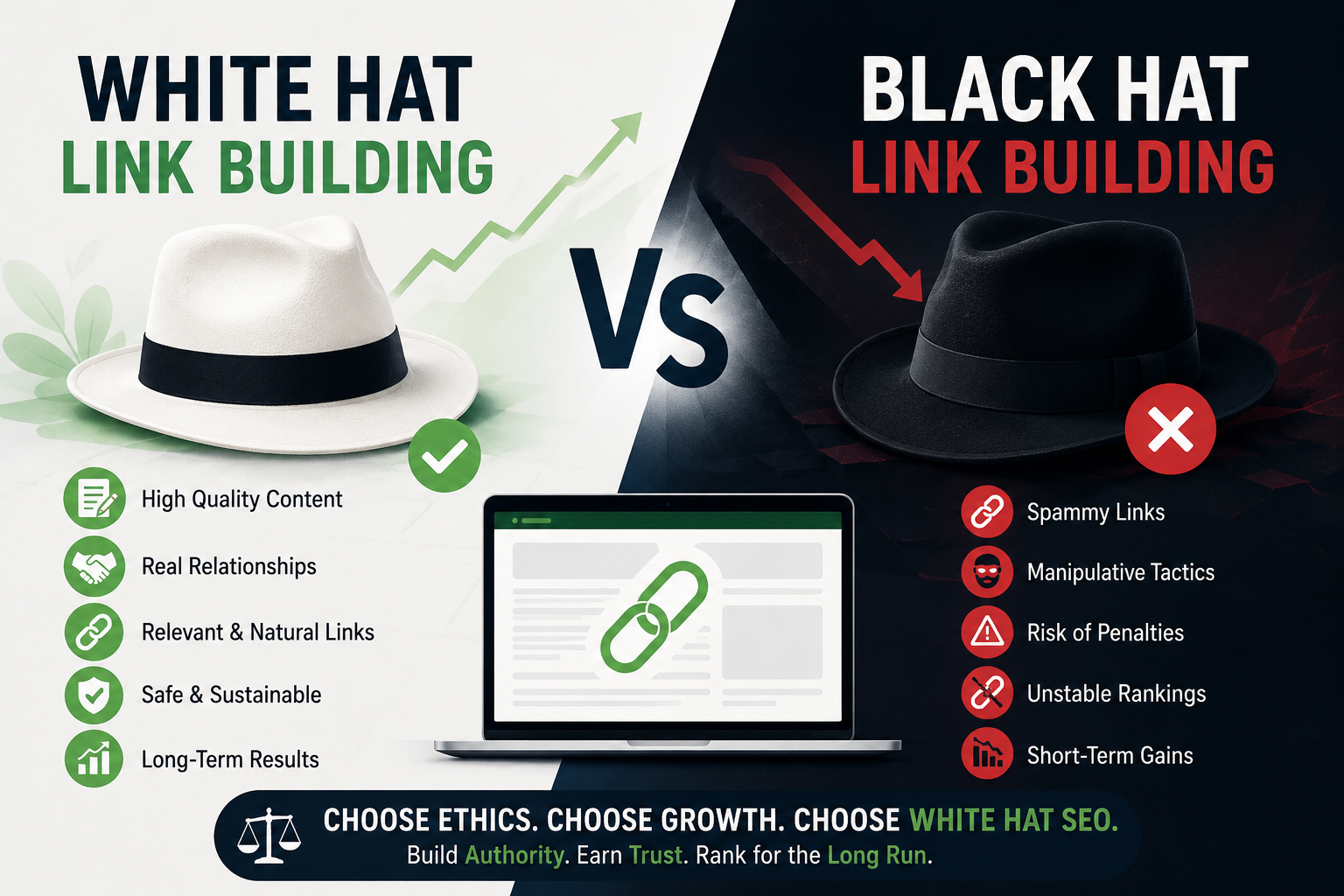

White Hat vs. Black Hat Link Building
Link building remains one of the most powerful components of a successful SEO strategy.
High-quality backlinks help search engines understand that your website is trustworthy, relevant, and authoritative.
However, not all link-building methods are created equal. The biggest distinction lies between White Hat and Black Hat link building.
While both approaches aim to improve search rankings, they differ significantly in how backlinks are acquired and the long-term impact they have on a website.
Understanding the difference is essential for any business investing in professional link building services.
What Is White Hat Link Building?
White Hat link building refers to ethical SEO practices that follow Google’s guidelines.
The focus is on earning backlinks naturally through valuable content, genuine relationships, and relevant publisher outreach.
Instead of trying to manipulate search engines, White Hat strategies prioritize creating content people actually want to reference and share.
Common White Hat techniques include:
- Guest posting on reputable websites
- Contextual link insertions
- Digital PR campaigns
- Resource page outreach
- Creating original, valuable content
- Building relationships with publishers
These methods require time and effort, but they produce backlinks that remain valuable for years.
What Is Black Hat Link Building?
Black Hat link building involves tactics designed to manipulate search engine rankings by violating Google’s guidelines. These methods often promise quick results but carry significant risks.
Examples include purchasing large quantities of spammy backlinks, using private blog networks (PBNs), automated link-building software, hidden links, and excessive link exchanges that exist solely to influence rankings.
Although these tactics may temporarily improve rankings, they often result in penalties, traffic loss, or complete removal from search results when detected.
The Key Differences
The primary difference between White Hat and Black Hat SEO is intent.
White Hat focuses on providing value to users while building authority naturally.
Black Hat focuses on exploiting search engine algorithms for short-term gains.
White Hat campaigns usually take longer to produce results, but those results are stable and sustainable.
Black Hat techniques may deliver rapid improvements initially, but they expose businesses to significant long-term risks.
Why White Hat Link Building Is the Better Choice
Search engines have become increasingly sophisticated.
Google’s algorithms now evaluate backlink quality, relevance, editorial context, and user value rather than simply counting the number of links pointing to a website.
Businesses using White Hat SEO benefit from:
- Sustainable keyword rankings
- Higher-quality backlinks
- Stronger brand credibility
- Lower risk of penalties
- Long-term organic growth
Most importantly, ethical link building strengthens a business’s reputation rather than putting it at risk.
The Risks of Black Hat SEO
Many website owners are attracted to Black Hat methods because they appear faster and cheaper. However, these short-term gains often come with serious consequences.
Poor-quality backlinks can trigger manual actions or algorithmic penalties, causing dramatic drops in rankings and organic traffic.
Recovering from these penalties often requires extensive backlink audits, link removals, and months of rebuilding trust with search engines.
For businesses that depend on organic traffic, the cost of recovery is usually far greater than the initial savings.
Professional Link Building Services Follow White Hat Practices
Reputable SEO agencies focus exclusively on White Hat methods because they understand that long-term success depends on quality rather than shortcuts.
Professional link-building campaigns typically include manual outreach, contextual editorial placements, guest posting, and partnerships with trusted publishers. Every backlink is selected based on relevance, authority, and value to the reader.
Instead of chasing hundreds of low-quality links, professional campaigns focus on earning a smaller number of highly relevant backlinks that deliver lasting SEO benefits.
How to Identify a Trustworthy Link Building Service
If you’re hiring an SEO agency, ask about their process before investing.
A reliable provider should explain where backlinks come from, how publishers are selected, and whether the outreach process is performed manually. Transparency, detailed reporting, and niche relevance are all signs of a quality service.
Be cautious of providers promising hundreds of backlinks within days or guaranteed #1 rankings. Ethical SEO takes time, and no agency can legitimately guarantee top positions in search results.
Which Strategy Should Your Business Choose?
For any business focused on long-term growth, the answer is clear.
White Hat link building may require more patience, but it builds a strong foundation that continues delivering value over time.
Every high-quality backlink strengthens your website’s authority, increases search visibility, and improves credibility with both users and search engines.
Black Hat techniques, by contrast, gamble your website’s reputation for temporary gains that may disappear overnight.
Final Thoughts
SEO is a long-term investment, and your link-building strategy should reflect that.
While Black Hat methods may seem appealing because of their speed, the risks far outweigh the rewards.
White Hat SEO focuses on earning trust through valuable content, ethical outreach, and genuine publisher relationships.
Businesses that invest in professional link building services and well-planned link-building campaigns are far more likely to achieve sustainable rankings, stronger brand authority, and consistent organic growth.
In today’s competitive search landscape, lasting success doesn’t come from manipulating search engines—it comes from earning their trust.