

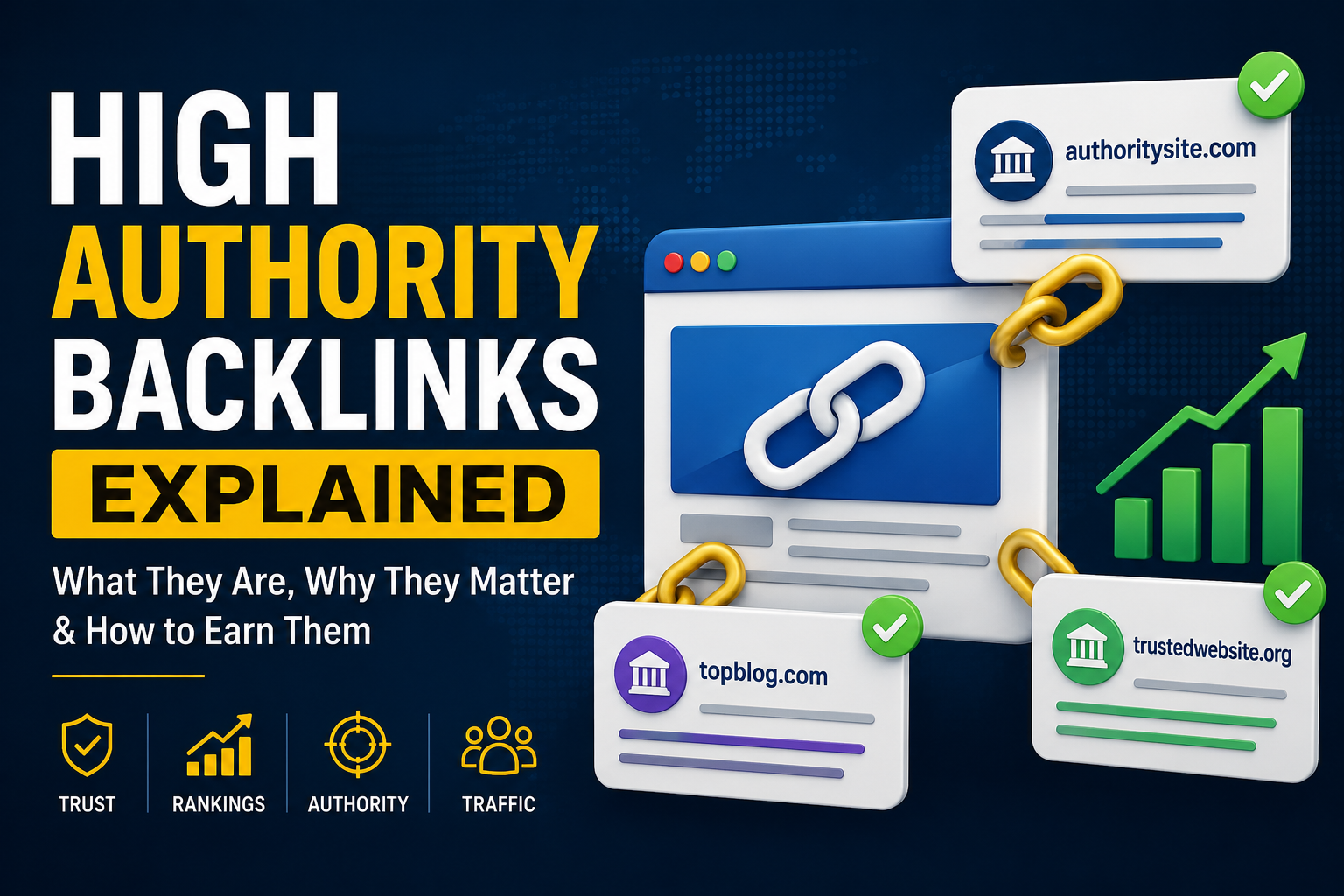

High Authority Backlinks: A Complete Guide
If you’ve spent any time learning about SEO, you’ve probably heard the phrase high authority backlinks.
They’re often described as one of the most important ranking factors, and for good reason.
While Google uses hundreds of signals to determine search rankings, backlinks remain one of the strongest indicators of a website’s credibility and trustworthiness.
A backlink is simply a hyperlink from one website to another.
However, not every backlink carries the same value. A link from an established, trustworthy website can significantly improve your search visibility, while dozens of low-quality links may provide little benefit or even harm your rankings.
This is why SEO professionals focus on earning high-authority backlinks instead of chasing large quantities of low-quality links.
In this guide, we’ll explain what high-authority backlinks are, why they matter, and how you can build them using ethical, long-term SEO strategies.
What Are High Authority Backlinks?
High authority backlinks are links that come from reputable, trustworthy websites with strong online credibility.
These websites have earned their reputation through consistent publishing, valuable content, genuine audience engagement, and a healthy backlink profile.
When a respected website links to your page, search engines interpret that backlink as a recommendation.
It tells Google that your content provides value and deserves to be considered a reliable source of information. As a result, your pages have a better chance of ranking higher for relevant keywords.
Since earning authority backlinks often requires time and investment, it’s important to measure their potential value before starting a campaign.
Using a Backlink ROI Calculator can help estimate the return on your link-building efforts by comparing costs with the expected SEO and traffic gains.
This allows businesses to prioritize high-impact opportunities and invest in backlinks that are more likely to deliver measurable long-term results.
Unlike low-quality backlinks, authority links are typically earned through valuable content, editorial mentions, guest posting, digital PR, or strategic partnerships rather than automated or manipulative tactics.
Why High Authority Backlinks Matter?
Backlinks are one of Google’s most influential ranking signals because they help measure trust.
When authoritative websites consistently reference your content, search engines gain confidence that your website deserves greater visibility.
High-authority backlinks don’t just improve rankings; they also increase organic traffic, strengthen your website’s credibility, improve domain authority, and generate referral visitors from trusted sources.
They help establish your brand as an authority within your industry while making it easier for future content to rank.
Instead of focusing on building hundreds of backlinks, successful SEO campaigns prioritize earning fewer but significantly stronger links from relevant websites.
How Google Evaluates Backlinks
Google doesn’t simply count the number of backlinks pointing to your website. Instead, it evaluates the quality, relevance, and trustworthiness of every link.
One of the first factors Google considers is the authority of the referring website. Links from respected publishers generally pass more value than links from newly created or spammy websites.
Relevance also plays a major role. A backlink from a website operating within your industry is usually much more valuable than a link from an unrelated niche.
For example, a SaaS company receiving a backlink from a technology publication sends a much stronger topical signal than receiving one from an unrelated entertainment website.
Google also evaluates where the backlink appears. Editorial links naturally placed inside informative content tend to carry far more weight than links found in footers, sidebars, or advertisements.
Finally, Google looks at the overall naturalness of your backlink profile. Websites with diverse, relevant backlinks generally perform better than websites relying on repetitive or manipulated link-building tactics.
Characteristics of High Authority Backlinks
Not every backlink deserves equal attention. High-quality backlinks usually come from websites with real organic traffic, established editorial standards, and strong topical relevance.
They are naturally integrated into useful content instead of being forced into pages solely for SEO purposes.
The best backlinks remain live permanently, provide value to readers, and originate from websites that publish high-quality content on a consistent basis.
Because these links are editorially earned rather than artificially created, they continue providing SEO value over the long term.
How High Authority Backlinks Improve SEO?
Every high authority backlink acts as a signal of trust. When multiple respected websites reference your content, search engines become more confident that your pages deserve higher rankings.
This increased trust often leads to improved keyword positions, greater organic visibility, more referral traffic, and stronger domain authority.
Over time, a healthy backlink profile also helps newly published pages get discovered and indexed more quickly.
Perhaps most importantly, high authority backlinks strengthen your website as a whole rather than benefiting only a single page.
As your site’s authority grows, it becomes easier to rank future content for competitive search terms.
Best Ways to Earn High Authority Backlinks
The safest and most sustainable approach to link building is earning backlinks by creating genuine value.
Publishing comprehensive guides, original research, industry statistics, case studies, and useful online tools gives other websites a reason to reference your content naturally.
Resources that solve real problems tend to attract backlinks over time without requiring aggressive outreach.
Guest posting also remains one of the most reliable strategies.
By contributing valuable articles to respected websites within your industry, you can earn contextual backlinks while expanding your brand’s visibility.
The focus should always be on quality rather than quantity.
Another effective method is link insertion, sometimes called a niche edit. Instead of publishing new articles, your backlink is added naturally to an existing page that already ranks well in Google.
Because these pages already possess authority and traffic, niche edits often deliver SEO results more quickly.
Digital PR campaigns can also generate exceptional backlinks. Journalists, bloggers, and industry publications frequently look for expert insights, original research, and unique statistics.
Providing valuable information can lead to editorial mentions from highly authoritative websites.
Creating free SEO tools, calculators, templates, and generators is another proven strategy.
Practical resources encourage bloggers, marketers, and businesses to reference your website, generating natural backlinks over time.
Common Link Building Mistakes
Many website owners unknowingly damage their SEO by pursuing shortcuts instead of sustainable strategies.
Buying spam backlinks, participating in private blog networks (PBNs), using automated link-building software, or excessively optimizing anchor text can all create an unnatural backlink profile.
While these techniques may produce temporary improvements, they often violate search engine guidelines and increase the risk of future ranking losses.
The safest approach is to focus on editorially earned backlinks from relevant, trustworthy websites rather than attempting to manipulate search algorithms.
How to Identify High Authority Websites?
Before investing time or money into acquiring backlinks, it’s important to evaluate the quality of the referring website.
Look for websites that receive genuine organic traffic, publish helpful content regularly, and have a strong reputation within their industry.
Relevance should always take priority over simple authority metrics because a contextual backlink from a niche-specific website often provides greater SEO value than an unrelated high-authority domain.
Professional SEO tools such as Ahrefs, Semrush, Moz, and Google Search Console can help analyze backlink quality, referring domains, organic traffic, and overall website authority.
Measuring the Impact of High Authority Backlinks
Building backlinks is only part of a successful SEO strategy. Monitoring their impact is equally important.
After acquiring high-quality backlinks, track changes in keyword rankings, organic traffic, referral visitors, indexed pages, and overall domain growth.
SEO improvements rarely happen overnight, but consistent acquisition of authoritative backlinks usually produces noticeable gains over several months.
Regular analysis also helps identify which types of backlinks generate the strongest results, allowing you to refine future outreach campaigns.
Final Thoughts
High authority backlinks remain one of the most valuable assets in modern SEO.
They help search engines recognize your website as a trustworthy source, improve keyword rankings, increase organic traffic, and strengthen your overall online authority.
Rather than chasing hundreds of low-quality links, focus on earning editorial backlinks from reputable websites within your niche.
Combine exceptional content with ethical outreach, guest posting, digital PR, and valuable online resources to build a backlink profile that delivers sustainable, long-term results.
In SEO, quality will always outperform quantity.
A handful of high-authority backlinks from trusted websites can often generate more value than hundreds of low-quality links, making them one of the smartest long-term investments for any website looking to grow its search visibility.